Post-Viral Autonomic Dysfunction
Viral infections can damage autonomic nerve fibers or trigger immune responses that disrupt nervous system regulation. Many POTS cases develop within weeks or months of an acute infection.

Your heart races just from standing up. Dizziness makes you afraid to leave the house. You have been told it is just anxiety. You wore a heart monitor for a week and got no real answers. Our team evaluates autonomic function directly, identifies the triggers behind your symptoms, and builds a structured recovery plan that treats the cause instead of the label.
Dysautonomia is rarely caused by a single factor. These are the most common drivers we identify during your conditions intake at Prince Health in The Woodlands.
Viral infections can damage autonomic nerve fibers or trigger immune responses that disrupt nervous system regulation. Many POTS cases develop within weeks or months of an acute infection.

Misalignment at the atlas and axis vertebrae can compress or irritate the brainstem and vagus nerve, maintaining sympathetic dominance and impairing the body's ability to regulate heart rate on position change.

The immune system can produce antibodies that attack autonomic nerve receptors, disrupting the signals that control blood vessel constriction, heart rate, and digestion. This form of POTS often coexists with other autoimmune conditions.

Low blood volume forces the heart to compensate with a faster rate. Prolonged bed rest or inactivity shrinks blood volume further and weakens the cardiovascular system, creating a cycle that worsens orthostatic symptoms.

Overactive mast cells release histamine and other inflammatory mediators that dilate blood vessels and trigger flushing, tachycardia, and blood pressure drops. This overlap with POTS is increasingly recognized in clinical research.

COVID-19 has become one of the most common triggers for new-onset POTS. Texas heat compounds the problem. High temperatures increase vasodilation and fluid loss, making orthostatic symptoms significantly worse for patients in The Woodlands and surrounding areas.
POTS affects multiple body systems, not just heart rate. Symptoms shift from day to day and worsen with heat, stress, dehydration, or prolonged standing. Our evaluation captures the full pattern.
"Seven doctors. Four years. Every cardiology workup came back clean. The first time anyone made me stand up and watched my heart rate, the diagnosis was obvious."
The average POTS patient sees 7 doctors over 4 years before getting diagnosed. We perform orthostatic testing on your first visit, then build a treatment plan around the specific subtype driving your symptoms.
We evaluate autonomic function on your first visit. Orthostatic testing, full symptom timeline, and targeted lab work identify the specific triggers behind your dysautonomia. No more guessing. No more being told it is all in your head.
Autoimmune markers, adrenal function, inflammatory panels, nutrient status, and metabolic function are evaluated together to identify every factor driving autonomic dysfunction.
Precise chiropractic adjustments in the upper cervical and thoracolumbar regions restore proper nerve signaling and support the shift from sympathetic dominance toward autonomic balance.
Heart rate variability, orthostatic vitals, and functional capacity are tracked at regular intervals. Graduated exercise and lifestyle protocols are adjusted based on objective data, not guesswork.
A disorder of the autonomic nervous system that causes an abnormal heart rate increase upon standing, along with dizziness, fatigue, and brain fog. Treated at Prince Health with functional medicine evaluation and chiropractic nervous system care to address the underlying triggers and restore autonomic regulation.
The autonomic nervous system runs in the background. It controls heart rate, blood pressure, digestion, temperature, and dozens of other functions you never think about. Dysautonomia is the umbrella term for conditions where this system breaks down. POTS is the most common form, affecting an estimated 1 to 3 million Americans, the majority of them women between ages 15 and 50.
Standing up should not feel like running a sprint. In a healthy body, the heart rate increases by 10 to 15 beats per minute when you move from sitting to standing. POTS patients experience a sustained jump of 30 or more beats per minute within the first 10 minutes of standing. That surge brings lightheadedness, palpitations, chest tightness, tremors, and nausea. Some patients faint. Many describe the feeling of their body working at maximum effort just to stay upright.
Triggers vary widely. POTS often develops after a viral infection, surgery, pregnancy, or a period of prolonged bed rest. COVID-19 has become one of the most common new-onset triggers, which is why we routinely evaluate POTS patients for overlapping long COVID. The condition is also associated with reactivated Epstein-Barr virus, mast cell activation, and autoimmune conditions. Identifying the specific trigger matters, since treatment that targets the underlying driver produces better outcomes than symptom management alone. Functional medicine testing uncovers these root causes.
Diagnosis is frequently delayed. Symptoms overlap with anxiety, deconditioning, and panic disorder. Many patients spend years being told nothing is wrong before someone performs a simple standing test with heart rate monitoring. Structural factors play a role as well. Upper cervical misalignments can compress the brainstem and vagus nerve, maintaining the sympathetic overdrive that keeps POTS patients stuck. Chiropractic treatment addresses these structural contributors directly.
Your treatment plan may include one or both of the following therapies, selected based on your evaluation results and the specific triggers identified.

Functional medicine identifies the root triggers of autonomic dysfunction through advanced lab work, autoimmune panels, and metabolic testing. Treatment protocols address the specific drivers keeping your nervous system in overdrive.
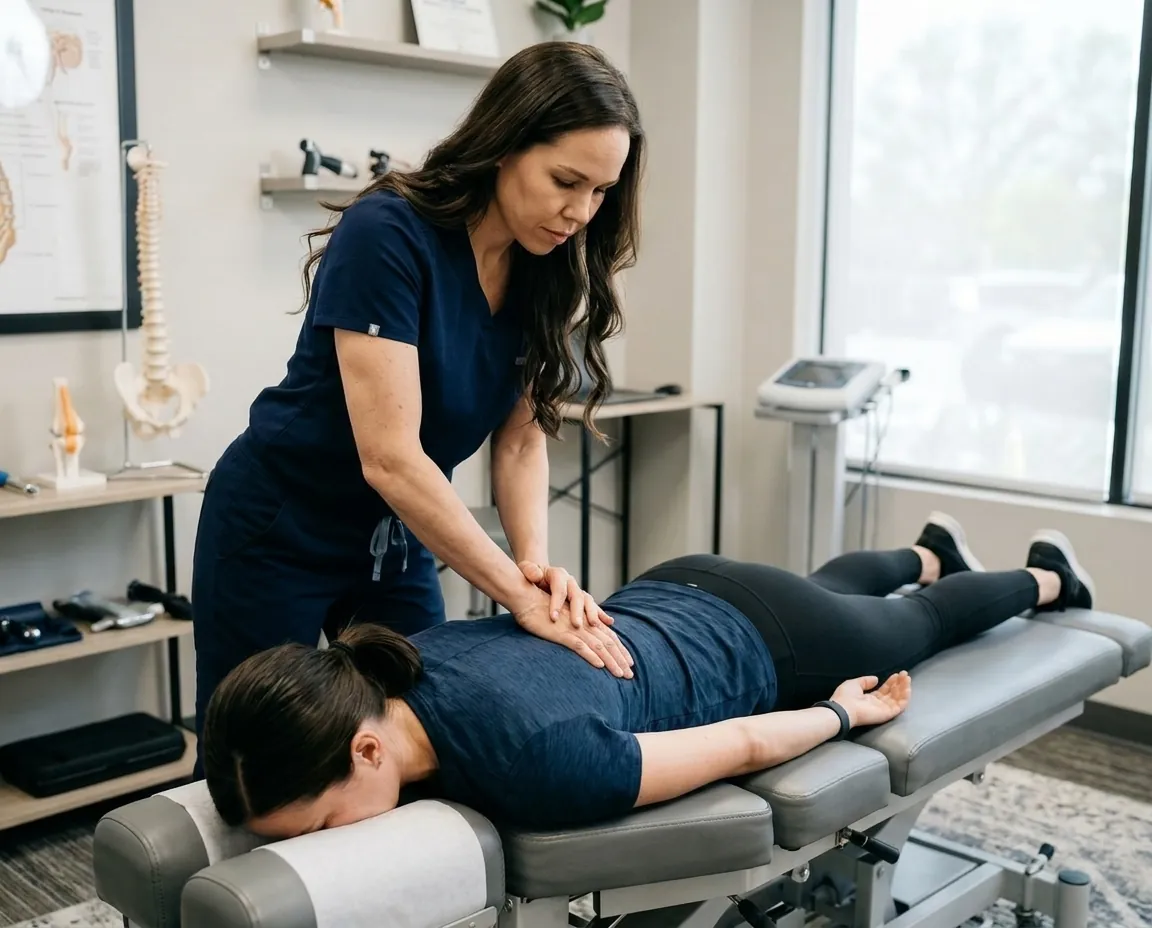
Upper cervical and thoracolumbar chiropractic adjustments restore proper nervous system signaling. Spinal misalignments can maintain sympathetic dominance and block your body from regulating heart rate and blood pressure normally.
Four steps from first visit to documented progress. The same protocol every patient gets, regardless of how busy the clinic is.

Detailed history review, orthostatic vital signs testing, autonomic symptom assessment, and evaluation of potential triggers including viral history, autoimmune markers, and spinal alignment.
Advanced panels evaluating autoimmune markers, adrenal function, inflammatory markers, nutrient status, and metabolic function to identify the specific drivers behind your autonomic dysfunction.
A clear plan combining chiropractic nervous system care, functional medicine protocols, graduated exercise programming, and dietary and lifestyle optimization tailored to your specific triggers.

Regular monitoring of orthostatic vitals, heart rate variability, functional capacity scores, and lab markers to document improvement and refine your protocol at each reassessment.
Schedule your evaluation at Prince Health in The Woodlands, TX. We evaluate autonomic function, identify your triggers, and build a structured recovery protocol.
POTS (Postural Orthostatic Tachycardia Syndrome) is a form of dysautonomia where the heart rate spikes abnormally upon standing. Common triggers include viral infections (including COVID-19), autoimmune conditions, and spinal misalignment. Our evaluation identifies which underlying factors are driving your autonomic dysfunction.
Yes, and it is one of the most effective interventions. The key is starting with reclined or seated exercises and building tolerance gradually. Abrupt intense exercise can worsen symptoms. We design a graduated program based on your current functional capacity.
Increased fluid intake (2 to 3 liters daily) and higher salt consumption are standard recommendations. Small, frequent meals help avoid post-meal blood pressure drops. Our functional medicine evaluation identifies additional dietary modifications based on your lab results and specific triggers.
Upper cervical misalignment can directly affect the vagus nerve and brainstem, which regulate autonomic function. Chiropractic treatment targeting the upper cervical spine can improve vagal tone and reduce the severity of POTS episodes in many patients.
Many patients achieve significant improvement or full remission with the right treatment approach. Recovery timelines vary based on the underlying cause. Post-viral POTS often has a better prognosis than autoimmune-driven forms. We track autonomic function markers to measure your progress objectively.
Treatment costs depend on the specific evaluation and therapies recommended for your case. Standard office visits and many diagnostic tests are covered by insurance. We provide transparent pricing for any services that fall outside your coverage.
Yes. POTS commonly develops during adolescence, and our approach is adapted for younger patients. Gentle chiropractic techniques, nutritional support, and graduated exercise programs are all appropriate for teens. We work closely with families to ensure the treatment plan fits their daily routine.
POTS frequently emerges after viral illness and overlaps with thyroid, infectious, and post-viral conditions. Treating the underlying triggers calms the autonomic system.

Multi-modal approach to persistent post-COVID symptoms through hyperbaric oxygen therapy, IV therapies, functional medicine evaluation, and nervous system restoration.

Comprehensive management of chronic EBV reactivation through functional medicine evaluation, immune support, and targeted therapies including IV ozone and SOT.

Comprehensive evaluation and multi-modal treatment for acute and chronic Lyme disease through functional medicine, IV therapies, and immune system support.

Comprehensive thyroid evaluation through functional medicine, including advanced panels that go beyond standard TSH testing to identify autoimmune, conversion, and nutrient factors.
Our office is located at 10847 Kuykendahl Rd #350 in The Woodlands, TX 77382, easily accessible from Woodlands Parkway, Kuykendahl Road, and the I-45 corridor.
We serve patients from Alden Bridge, Cochran's Crossing, Creekside Park, Sterling Ridge, Panther Creek, Grogan's Mill, and surrounding communities.
10847 Kuykendahl Rd #350
The Woodlands, TX 77382
Schedule your appointment at Prince Health in The Woodlands, TX. We listen first, evaluate thoroughly, and build a plan that fits your goals.