Rotator Cuff Injury
Tears, tendinopathy, or impingement of the rotator cuff produce weakness and pain with overhead motion. Common from repetitive use, poor scapular mechanics, or sudden trauma.

You cannot reach the top shelf. Sleep is interrupted every time you roll onto that side. Someone told you to rest it, take ibuprofen, or start thinking about surgery. Our team looks at the full upper-quadrant picture to find what is actually driving your shoulder pain and build a plan that gets you moving again.
Shoulder pain rarely comes from a single source. These are the most common drivers we identify during evaluation at our conditions practice in The Woodlands.
Tears, tendinopathy, or impingement of the rotator cuff produce weakness and pain with overhead motion. Common from repetitive use, poor scapular mechanics, or sudden trauma.

Adhesive capsulitis stiffens the shoulder capsule, severely restricting range of motion. Often follows injury or prolonged disuse and progresses through painful, frozen, and thawing stages.

Inflammation of the bursa, the fluid-filled cushion between bone and soft tissue, produces sharp pain with movement. It often coexists with rotator cuff problems.

When the humeral head is forced out of the socket, surrounding ligaments and the labrum are damaged. Recurrence becomes common without proper rehabilitation.

Cervical disc protrusion, thoracic outlet compression, or scapular dyskinesis can refer pain into the shoulder, mimicking a primary shoulder problem.

Glenohumeral or AC joint arthritis erodes cartilage, causing stiffness, grinding, and progressive loss of motion. Conservative care can preserve function for years.

Fractures of the clavicle, humerus, or scapula from falls or impacts disrupt shoulder mechanics for months. Proper alignment during healing matters as much as the cast itself.

Loose ligaments or a torn labrum allow the humeral head to slip partially out of the socket, producing apprehension and recurring injury patterns.
Symptoms depend on which structures are involved and how long the condition has been developing. Our evaluation assesses the full upper quadrant to identify the source of your pain.
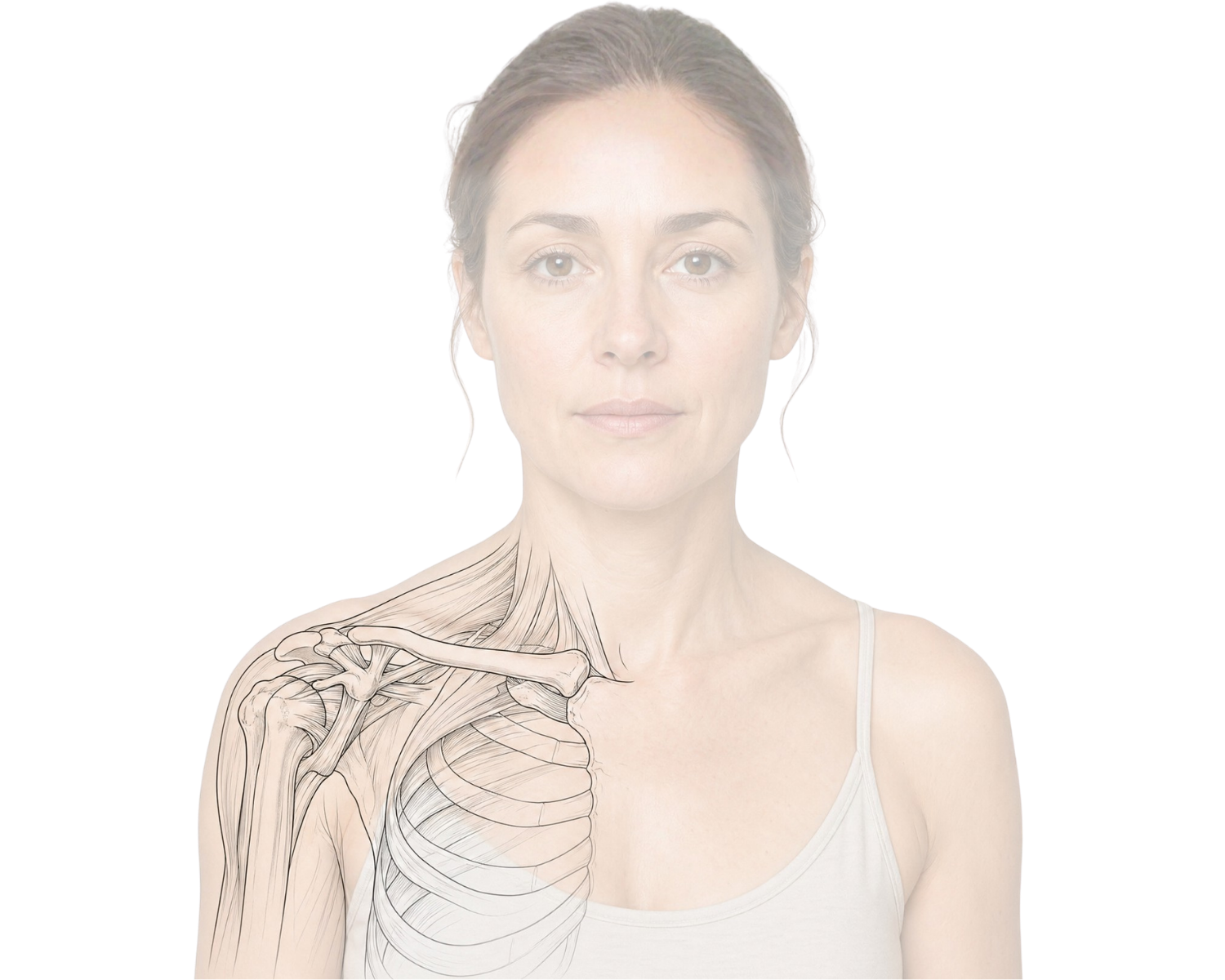
Shoulder Complex · Anterior View
Three common sites where rotator cuff, joint, or tendon dysfunction produces the symptoms at right.
Most providers look at the shoulder in isolation. They order an MRI, identify inflammation or a tear, and route you toward cortisone or a surgical consult. We evaluate the shoulder alongside the cervical spine, thoracic spine, and rib cage to determine which structures are involved and whether conservative care can help you recover.
We evaluate the shoulder, cervical spine, thoracic spine, and rib cage together. Restrictions in adjacent structures often drive shoulder dysfunction that isolated treatment misses entirely.
Chiropractic adjustments, soft tissue techniques, and regenerative therapy work together to restore joint mechanics, break down adhesions, and promote tissue repair at the biological level.
Every patient receives a clear treatment timeline with functional milestones. You will see documented progress in range of motion, strength, and pain levels at each reassessment.
A condition affecting the shoulder joint's rotator cuff, labrum, tendons, bursa, or surrounding structures. Treated at Prince Health with chiropractic correction and regenerative medicine to restore function and reduce pain.
The shoulder is the most mobile joint in the body. It achieves that range of motion through a shallow socket, a complex network of tendons and ligaments, and four rotator cuff muscles that keep the humeral head centered during movement. That design prioritizes flexibility over stability, which is exactly why the shoulder is so vulnerable to injury.
Rotator cuff problems account for the majority of cases. Tendinitis, partial tears, and full-thickness tears all create pain with overhead reaching, lifting, and sleeping on the affected side. Many patients are told surgery is the only option. For partial tears and chronic tendinopathy, regenerative medicine offers a non-surgical pathway that supports actual tissue repair rather than temporary symptom relief.
Posture plays a larger role than most people realize. The forward-head, rounded-shoulder position common among desk workers shifts scapular mechanics and narrows the subacromial space. This creates impingement patterns that would not exist with proper alignment. A 2020 study in the Journal of Shoulder and Elbow Surgery found that scapular stabilization exercises reduced impingement symptoms by 46 percent in office workers with chronic shoulder pain.
Shoulder pain rarely stays in the shoulder. The cervical spine, thoracic spine, and rib cage all influence how the shoulder blade moves. Restrictions in any of these areas can create compensatory patterns that keep the shoulder inflamed and painful. Our chiropractic evaluation covers the entire upper quadrant to identify every contributing factor, not just the obvious one.
Your treatment plan may include one or both of the following therapies, selected based on your evaluation results and the specific shoulder structures involved.
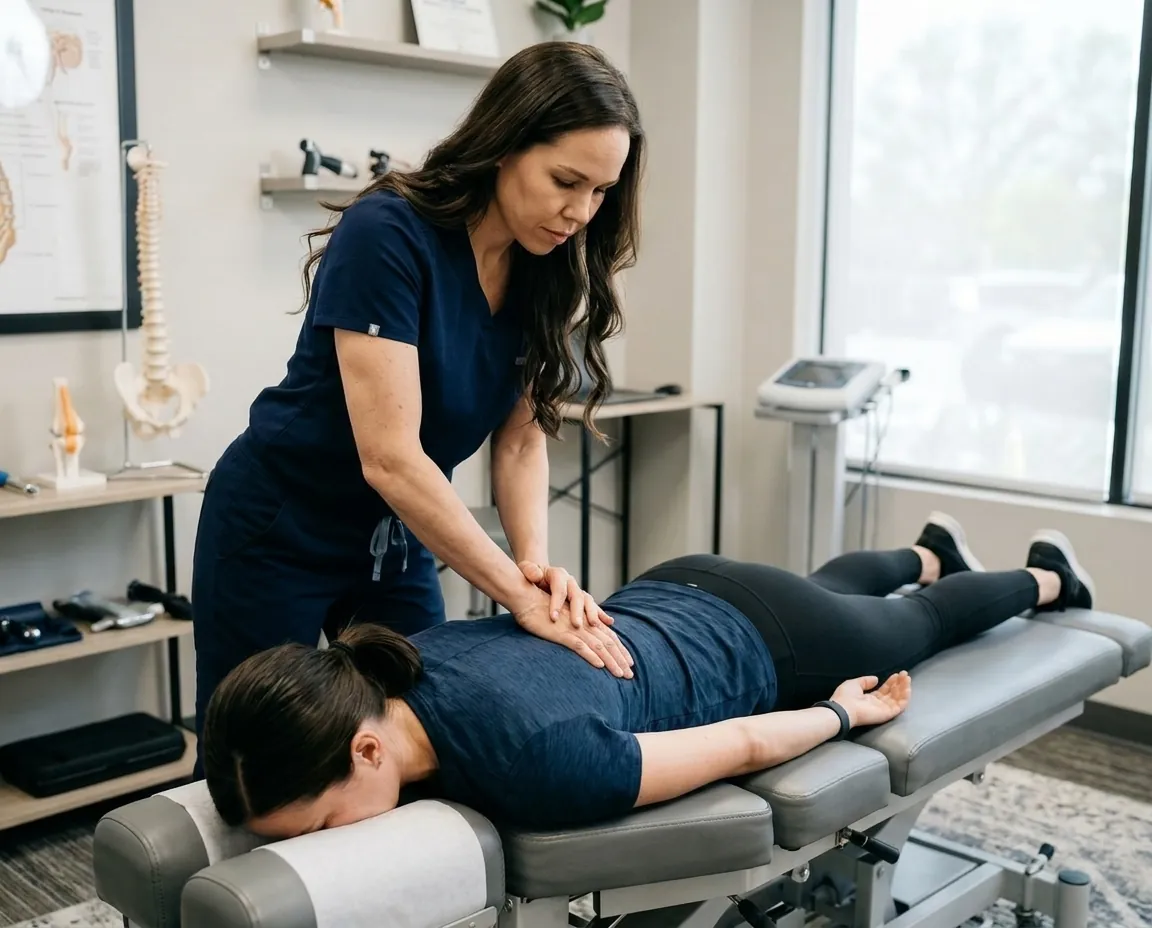
Precise adjustments restore proper joint mechanics in the shoulder complex, cervical spine, and thoracic spine. Correcting restrictions in these areas reduces impingement and allows the rotator cuff to function without compensation.

Regenerative injections deliver growth factors and cellular signaling molecules directly to damaged shoulder tissue, supporting tendon and ligament repair at the biological level without surgical intervention.
Four steps from first visit to documented progress. The same protocol every patient gets, regardless of how busy the clinic is.
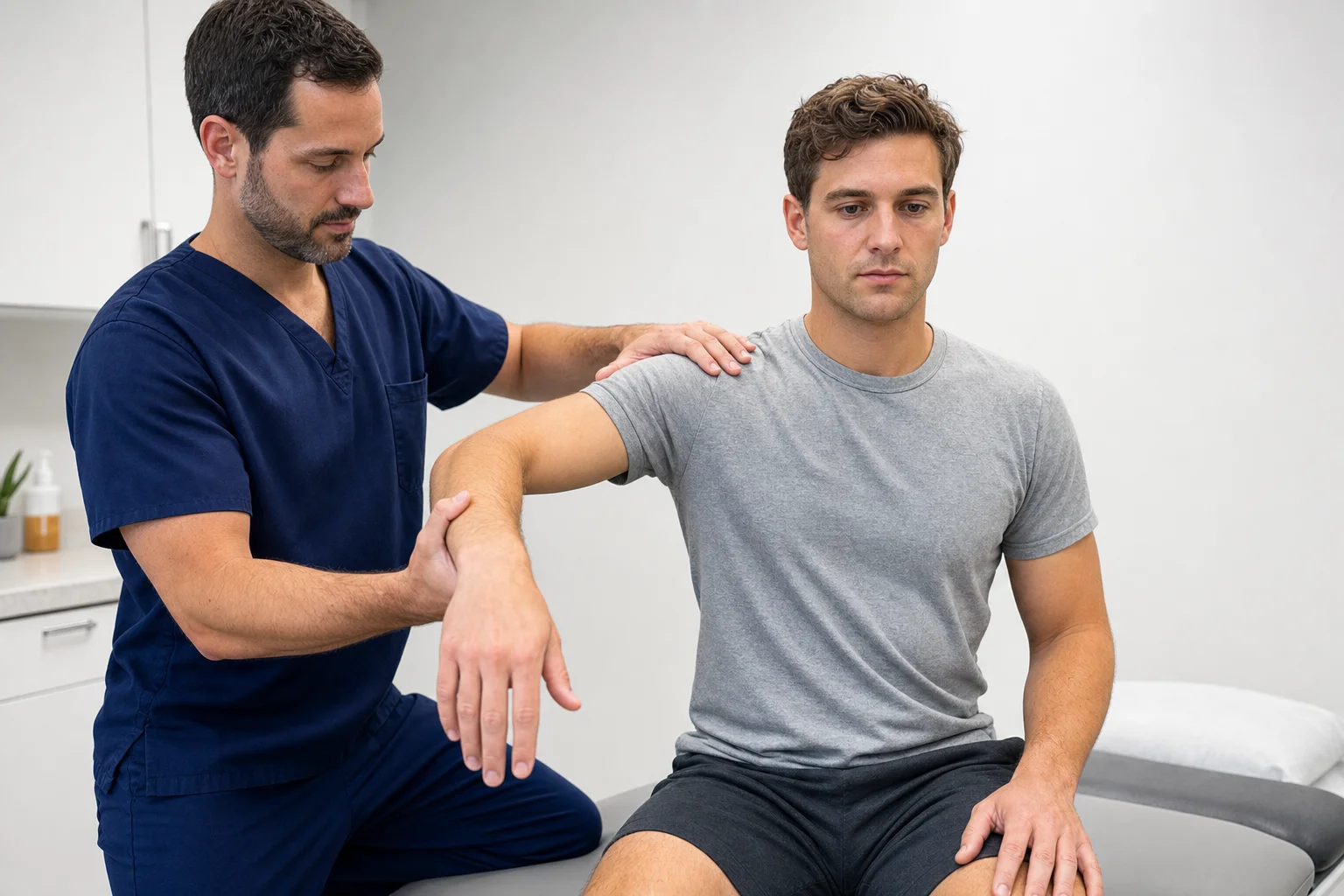
Detailed shoulder examination including orthopedic provocation tests, range of motion measurement, strength testing, and cervical and thoracic spine screening.

Review of existing imaging or referral for MRI and X-ray to assess rotator cuff integrity, labral involvement, and joint space. Imaging guides treatment selection.
A clear plan combining chiropractic correction, soft tissue work, rehabilitation exercises, and regenerative options tailored to your diagnosis and activity goals.

Regular reassessment of range of motion, strength, and functional ability to confirm improvement and refine your treatment plan over time.
Schedule your evaluation at Prince Health in The Woodlands, TX. We assess your shoulder, identify the root cause, and determine whether conservative treatment options are right for you.
Shoulder pain without a specific injury often comes from impingement syndrome, frozen shoulder, postural strain, or referred pain from the cervical spine. Repetitive overhead movements, desk posture, and sleeping position can all contribute. A thorough evaluation identifies which structures are involved.
Seek evaluation if shoulder pain persists beyond two weeks, worsens at night, limits your ability to raise your arm, or follows a fall or impact. Sudden onset shoulder pain with difficulty breathing warrants emergency care, as it can indicate a cardiac event.
Several systemic conditions can present as shoulder pain, including gallbladder disease, cervical disc herniation, and cardiac conditions. This is why our evaluation goes beyond the joint itself to rule out referred pain and underlying medical causes.
Regenerative medicine and chiropractic treatment can address many shoulder conditions non-surgically. Rotator cuff strains, impingement, and frozen shoulder often respond well to conservative care when the correct structures are identified and treated early.
Untreated frozen shoulder can last 1 to 3 years and may not fully resolve on its own. Active treatment through joint mobilization, chiropractic care, and targeted rehabilitation can significantly shorten recovery time and restore range of motion faster.
Most insurance plans cover chiropractic evaluation and treatment for shoulder pain. Coverage for regenerative medicine varies by plan. Contact our office to verify your specific benefits before your first visit.
Sleeping on the unaffected side with a pillow between your arms reduces pressure on the injured shoulder. Avoid sleeping on the painful side or with your arm overhead. We provide specific postural guidance as part of your treatment plan.
Shoulder pain often shares pathways with cervical, thoracic, and upper extremity conditions. These are the related conditions we frequently treat alongside it.

Comprehensive evaluation and treatment for acute and chronic neck pain through spinal alignment, soft tissue therapy, and nervous system restoration.

Root-cause evaluation and treatment for low back pain through chiropractic correction, decompression, and regenerative therapies that address the source of pain.

Non-surgical evaluation and treatment for knee pain through regenerative medicine, stem cell therapy, and functional rehabilitation.

Root-cause evaluation and treatment for migraines and chronic headaches through chiropractic care, functional medicine, and nervous system restoration.
Our office is located at 10847 Kuykendahl Rd #350 in The Woodlands, TX 77382, easily accessible from Woodlands Parkway, Kuykendahl Road, and the I-45 corridor.
We serve patients from Alden Bridge, Cochran's Crossing, Creekside Park, Sterling Ridge, Panther Creek, Grogan's Mill, and surrounding communities.
10847 Kuykendahl Rd #350
The Woodlands, TX 77382
Schedule your appointment at Prince Health in The Woodlands, TX. We listen first, evaluate thoroughly, and build a plan that fits your goals.