Your back will not stop aching. Your neck locks up every morning before your feet hit the floor. You have been cracking your own joints because nothing else has worked, and you are starting to wonder if this is just how life feels now. Our chiropractors use five distinct techniques to find the approach your spine actually responds to.
Most chiropractic offices use one or two techniques on every patient. Our chiropractors select from five based on your structural and neurological exam. Our pain management approach reassesses with measurable benchmarks so progress is documented, not assumed.
01 / Arsenal
Five techniques, matched to findings.
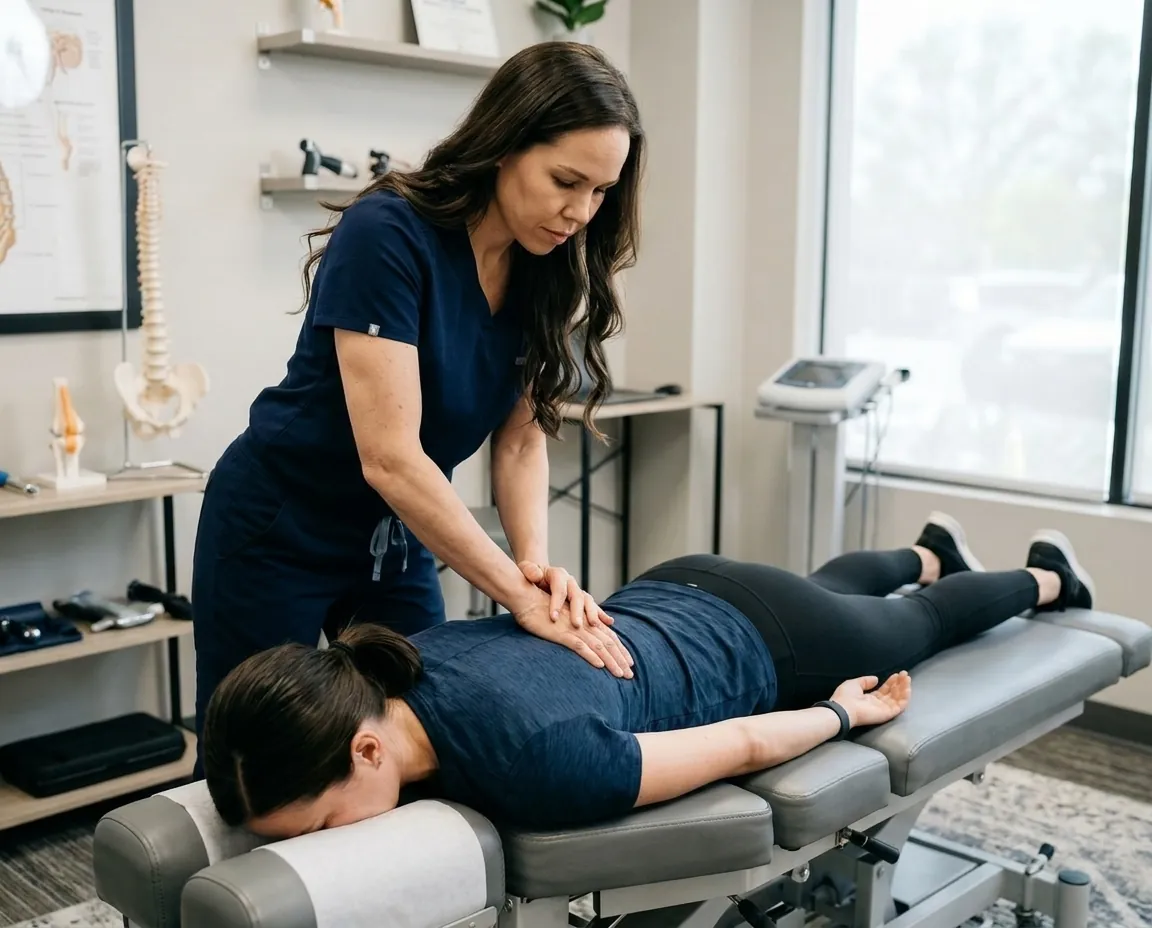
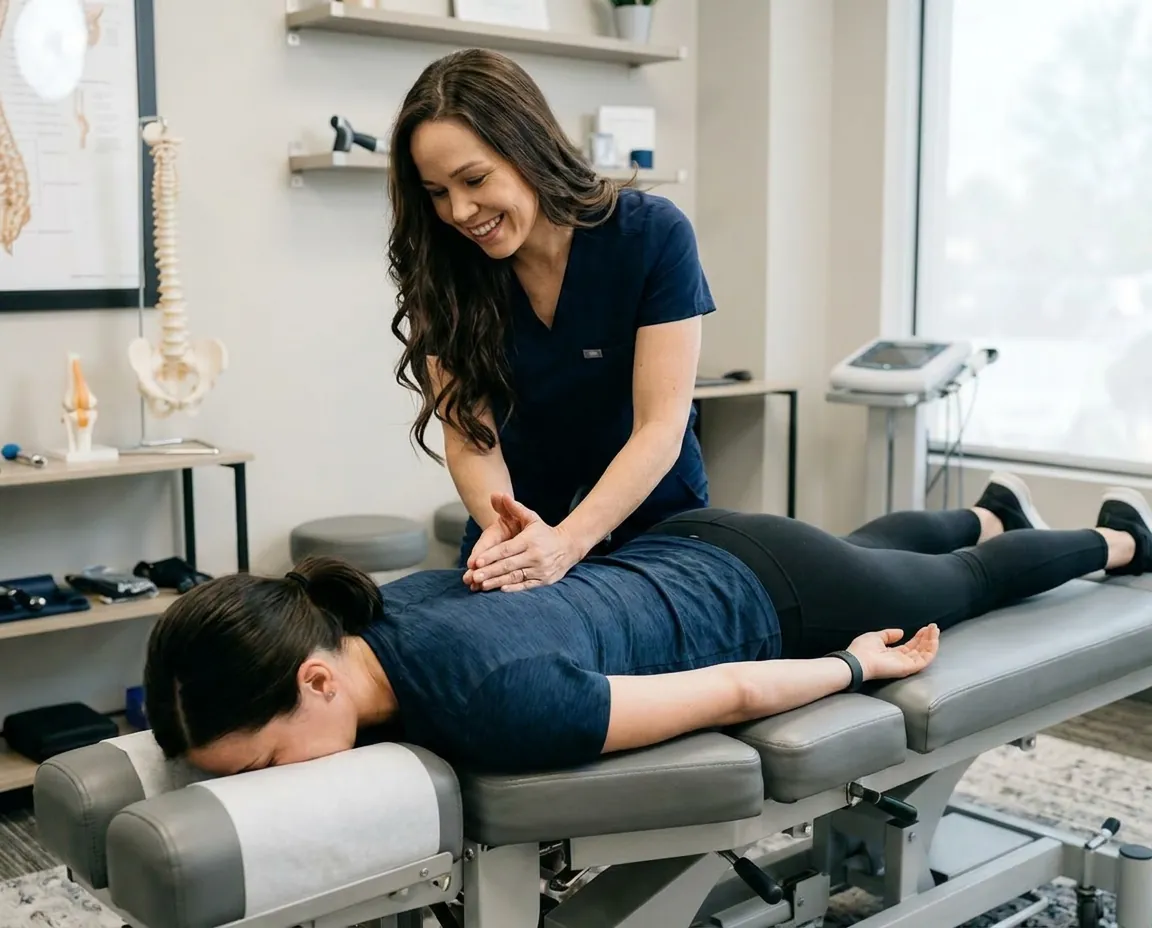
Activator Method for low-force precision. ART for adhesion release. Graston for soft tissue restrictions. Cox Flexion-Distraction for disc conditions. Manual adjustments for structural correction. Your plan uses the combination your case actually requires.
02 / Nervous system
More than pain relief.
Spinal misalignment compresses nerves and locks the autonomic nervous system into chronic fight-or-flight. Restoring alignment shifts you toward parasympathetic balance. Patients report better sleep, lower anxiety, and steadier digestion alongside their pain reduction.
03 / Integrated
Everything you need under one roof.
When chiropractic alone is not enough, we coordinate with regenerative medicine, functional medicine, and IV therapy on-site. No referral chains. No starting over with a new chart.
Understanding the approach
What is chiropractic treatment?
Multi-technique spinal care that uses Activator Method, Active Release Technique, Graston, Cox Flexion-Distraction, and manual adjustments to restore spinal alignment, relieve nerve compression, and optimize nervous system function for lasting pain relief.
Your spine is not just a stack of bones. It houses and protects your spinal cord, the central highway connecting your brain to every organ, tissue, and cell in your body. When vertebrae shift out of position, they compress nerves. That compression disrupts communication. The result is pain, stiffness, headaches, poor sleep, and systemic dysfunction most people never trace back to their spine.
Single-technique chiropractic care treats every patient the same way. That is a problem. A 25-year-old athlete with a disc bulge needs a completely different approach than a 60-year-old with spinal stenosis. Cox Flexion-Distraction works well for disc conditions but does nothing for fascial adhesions. Graston breaks up soft tissue restrictions but cannot address joint mobility. The right treatment depends entirely on what your evaluation reveals.
The nervous system connection is what separates chiropractic care from pain management alone. Spinal misalignment pushes your autonomic nervous system into chronic sympathetic dominance, the fight-or-flight state. Restoring alignment shifts your body toward parasympathetic balance. Patients who come in for neck pain or low back pain often report improvements in sleep quality, stress tolerance, and digestion. Those are direct results of restored nerve function, not coincidences.
How we compare
Restored alignment vs. masked symptoms.
The technique selection changes everything. It determines whether treatment addresses your specific problem or applies a generic correction and hopes for the best.
Recommended
Multi-Technique at Prince Health
Five techniques selected from your structural and neurological evaluation
Disc, joint, soft tissue, and nerve issues each treated with the matched method
Objective reassessment with measurable progress benchmarks rather than self-report
On-site access to regenerative medicine, IV therapy, and functional medicine when indicated
Pain medication only
Masks pain signals chemically without correcting the structural cause
Long-term use carries dependency risk, side effects, and tolerance
No improvement to spinal alignment, joint mobility, or nerve function
Symptoms return when medication stops because the underlying problem remains
Surgical intervention
Invasive option that should follow conservative care, not replace it
Carries surgical and anesthesia risk plus weeks of post-operative downtime
Hardware and fusions can shift load to adjacent segments and create new problems
Often unnecessary when targeted multi-technique chiropractic care is given a real trial first
Conditions we treat
Conditions that respond to chiropractic treatment.
Multi-technique care treats structural, neurological, and soft tissue conditions, from sciatica and disc-related leg pain to the vertigo and POTS cases single-method offices often decline.
The right technique changes with the patient. An infant, an expectant mother, and a driver rear-ended on I-45 each need something different from their chiropractor.
Pediatric
Pediatric chiropractic
Dr. Ashley Prince, DC, is pursuing her Diplomate with the International Chiropractic Pediatric Association and cares for children from infancy through the teen years. Pediatric visits use gentle, low-force techniques adapted to a growing spine, with parents in the room at every step.
Prenatal
Prenatal chiropractic
Pregnancy shifts posture, load, and pelvic alignment quickly. We use gentle, low-force methods like the Activator instrument, with positioning adapted to each stage of pregnancy, to keep expectant mothers comfortable and mobile alongside their OB’s guidance.
Auto injury
Auto accident and whiplash care
Whiplash symptoms often surface days after a collision. We evaluate post-accident neck and back injuries with a full structural and neurological exam, document the findings thoroughly, and build a recovery plan. If an injury needs more than chiropractic care, our on-site medical team works from the same chart.
Advantages
Three reasons it actually works.
Pain medications mask. Surgery removes. Multi-technique chiropractic does something different. Here is why the distinction matters in practice.
01 / Match
The right technique, not the only one we have.
Most offices use one or two methods on every patient. If that method does not match your condition, you plateau. We draw from Activator Method, Active Release Technique, Graston, Cox Flexion-Distraction, and manual adjustments, then match the right combination to your diagnosis. Disc issues get Cox. Fascial adhesions get Graston or ART. Joint restrictions get manual or instrument-assisted correction.
02 / Coverage
Insurance is common, and the math still works.
Many insurance plans include chiropractic benefits. We recommend verifying coverage before your first visit. Beyond the co-pay question, the bigger picture matters: a thorough multi-technique approach that resolves the root structural issue typically lowers your total healthcare spending by eliminating repeat specialist visits, imaging orders, and prescription cycles that never fix the cause.
03 / Evidence
Measured progress, not stayed-the-course guesswork.
We set objective benchmarks during your evaluation and reassess at regular intervals. Range of motion, neurological response, postural alignment. Each metric is tracked. If your plan is working, the data confirms it. If something needs to change, we see it before you feel it. This prevents the common problem of staying on a treatment plan that stopped producing results weeks ago.
Your visit
What to expect at your evaluation.
Four steps from first visit to documented progress. The same protocol every patient gets, regardless of how busy the clinic is.
01 / 04
Step 01
Structural and Neurological Evaluation
We review your health history, perform orthopedic and neurological testing, analyze your posture, and order imaging when clinically indicated. This evaluation identifies the specific structures driving your symptoms before any treatment is prescribed.
02 / 04
Step 02
Diagnostic Review and Technique Selection
Your findings determine which combination of techniques applies to your case. Disc involvement, joint restriction, soft tissue adhesion, and nerve compression each call for different methods. We select accordingly rather than running a template.
03 / 04
Step 03
Multi-Technique Treatment Session
Your treatment combines the methods matched to your diagnosis. Most patients feel immediate relief. Some experience mild soreness similar to post-exercise fatigue, which typically resolves within 24 hours. We discuss what to expect before every session.
04 / 04
Step 04
Reassessment and Plan Refinement
We reassess at defined intervals using objective benchmarks. Range of motion, neurological response, and structural alignment are measured and compared to your baseline. Your plan evolves with your progress, not on a fixed schedule.
Your doctors
Meet your chiropractors.
Two licensed Doctors of Chiropractic, one standard of care: examine first, match the technique to the finding, and measure the result.
Dr. Ashley Prince, DC
Founder / Practitioner
Palmer Chiropractic College graduate with prior medical school training at Nova Southeastern. Nationally recognized for pioneering a chiropractic protocol that restores taste and smell after COVID-19, and pursuing her Diplomate with the International Chiropractic Pediatric Association. Licensed by the Texas Board of Chiropractic Examiners (#13455).
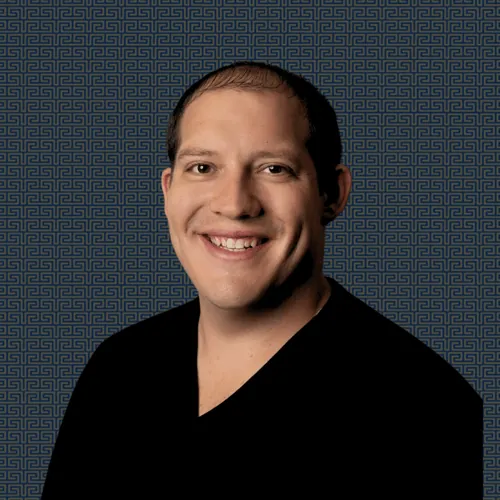
Texas Chiropractic College graduate focused on spinal manipulation and sports related injuries. Licensed by the Texas Board of Chiropractic Examiners (#15618). A husband, father of two, and avid outdoorsman caring for families across The Woodlands.
Visit Prince Health at 10847 Kuykendahl Rd #350 in The Woodlands, TX. The new patient special is $37 and includes a consultation, full structural and neurological exam, digital nerve scan, and your first adjustment.
Yes. Chiropractic treatments are performed by licensed Doctors of Chiropractic with extensive training. At Prince Health, we use a combination of manual and instrument-assisted techniques tailored to your comfort and clinical needs.
How many chiropractic sessions will I need?
This varies based on your condition, severity, and how your body responds. Many patients feel relief within a few sessions, while structural correction plans may span several weeks. We reassess regularly and adjust the plan based on measurable progress.
Does chiropractic treatment hurt?
Most patients feel immediate relief after a chiropractic treatment. Some experience mild soreness similar to post-exercise muscle fatigue, which typically resolves within 24 hours. We discuss what to expect before every session.
Can chiropractic care help with stress and anxiety?
Yes. Spinal adjustments influence the autonomic nervous system, helping shift your body from a sympathetic (fight-or-flight) state into a more balanced parasympathetic state. Many patients report improved sleep, lower anxiety, and better stress tolerance.
Does insurance cover chiropractic treatment at Prince Health?
Many insurance plans include chiropractic coverage. We recommend contacting our office to verify your specific benefits before your first visit. The depth of our evaluation and multi-technique approach often produces results that reduce your overall healthcare costs.
What conditions does chiropractic treatment help with?
What chiropractic techniques does Prince Health use?
We use Activator Method, Active Release Technique (ART), Graston Technique, Cox Flexion-Distraction, and manual spinal adjustments. Each technique serves a different clinical purpose, and your treatment plan combines the methods best suited to your specific diagnosis and comfort level.
What is a red flag in chiropractic care?
Red flags are findings that call for medical evaluation before any adjustment: loss of bladder or bowel control, numbness in the saddle area, fever alongside spine pain, progressive weakness in an arm or leg, or spine pain after significant trauma. Our chiropractors screen for these during your structural and neurological evaluation and refer you for medical care first when they appear. A practice that adjusts every patient without an exam is its own red flag.
Can a chiropractor prescribe medication like prednisone?
No. Doctors of Chiropractic in Texas do not prescribe medication. What makes Prince Health different is that Dr. Joseph Perlman, MD, practices on the same team, so if your case calls for medical management alongside chiropractic care, it is handled under one roof on one chart instead of through a referral chain.
Can chiropractors help the vagus nerve?
The vagus nerve is a major driver of your parasympathetic (rest-and-repair) state, and the upper cervical spine sits close to its pathway. Restoring alignment and easing tension in that region supports healthier autonomic balance, which is why many patients report calmer digestion, better sleep, and steadier stress tolerance during care. We frame this as support for nervous system function, not a cure for any specific disease.
Can chiropractic care improve blood flow?
Restoring joint motion and releasing chronic muscle tension supports normal local circulation in the tissues we treat, and patients often notice less stiffness and faster recovery. Chiropractic care is not a treatment for vascular disease; if your concern is cardiovascular, our medical team evaluates that separately.
How much does a chiropractor charge in Texas?
Fees across Texas vary widely with the depth of the exam, the techniques used, and whether imaging is involved, so a single number is misleading. At Prince Health, new patients start with a $37 first visit that includes the consultation, a full examination, a digital nerve scan, and your first adjustment, so you know exactly what your case needs before committing to a care plan. Many insurance plans also include chiropractic benefits; we help you verify coverage before your first visit.
Can a chiropractor fix cervical spondylosis?
No treatment reverses the age-related disc and joint changes of cervical spondylosis, and a trustworthy chiropractor will tell you that plainly. What chiropractic care does well is restore motion in the segments that still move, reduce the muscle guarding and nerve irritation that drive most of the day-to-day pain, and slow functional decline. Our chiropractors combine gentle techniques suited to arthritic spines, and the on-site medical team evaluates cases that need imaging or co-management.
Why do some doctors discourage chiropractic care?
Usually because of the profession's history of overclaiming, and sometimes from an outdated picture of how modern evidence-based chiropractors practice. Current clinical guidelines recommend spinal manipulation for common problems like low back pain, and at Prince Health the chiropractors work on the same team as Dr. Joseph Perlman, MD, screen every patient for red flags before any adjustment, and refer out when a case calls for medical care. That is the standard any provider, medical or chiropractic, should be held to.
Patient feedback
What patients say about chiropractic treatment.
4.9/ 5 from 392+ Google reviews
Practice-wide rating across every service and provider. View all reviews.
I’ve been to chiropractors my entire life and I have never had an adjustment like the ones I get from Dr. Aaron. The true care and concern that comes from each of the staff members is incredible. Life changing!
Kimberly Elkins
Awesome place! Dr. Aaron solved my pain issues in less than 10 minutes! All the staff are super friendly and supportive. Great place!
Honey AndCornflakes
Dr. Aaron is very kind and knowledgeable. Went to see him for sciatic pain — I felt the relief immediately after the therapy. I recommend him very highly.
Our office is located at 10847 Kuykendahl Rd #350 in The Woodlands, TX 77382,
easily accessible from Woodlands Parkway, Kuykendahl Road, and the I-45 corridor.
We serve patients from Alden Bridge, Cochran's Crossing, Creekside Park, Sterling Ridge, Panther Creek, Grogan's Mill, and surrounding communities.