Cervical Disc Herniation
A bulging or ruptured disc in the cervical spine compresses nearby nerves, producing sharp neck pain that often radiates into the shoulder, arm, or hand. Numbness and tingling are common.

The stiffness that greets you every morning. The headaches that start at the base of your skull and never fully leave. You cannot turn your head to check a blind spot without wincing. You have been told it is just stress or handed muscle relaxants that wear off by noon. Our team finds the structural problem behind your neck pain and builds a plan to fix it.
Neck pain is rarely caused by a single event. These are the most common drivers we identify during evaluation at our conditions practice in The Woodlands.
A bulging or ruptured disc in the cervical spine compresses nearby nerves, producing sharp neck pain that often radiates into the shoulder, arm, or hand. Numbness and tingling are common.

Every inch of forward head carriage adds roughly 10 pounds of effective load on the cervical spine. Prolonged screen time and desk work accelerate this pattern, straining muscles and compressing joints.

Rear-end collisions on I-45 and the Hardy Toll Road are a leading cause of whiplash in the Houston metro. Rapid acceleration-deceleration tears ligaments, strains muscles, and can damage discs without any visible injury.

Age-related degeneration of the cervical facet joints and discs narrows the spaces where nerves exit the spine. Bone spurs form, range of motion decreases, and chronic stiffness becomes the norm.

Stress, poor sleeping positions, and sustained awkward postures overload the trapezius, levator scapulae, and suboccipital muscles. Trigger points develop, creating persistent pain and referred headaches.

Pinched cervical nerves from disc protrusions, bone spurs, or foraminal narrowing send shooting pain, numbness, or weakness down the arm. Left untreated, nerve compression can cause lasting sensory and motor deficits.
Symptoms depend on which structures are involved. Muscle strain produces different patterns than disc herniation or nerve compression. Our evaluation identifies the true source.
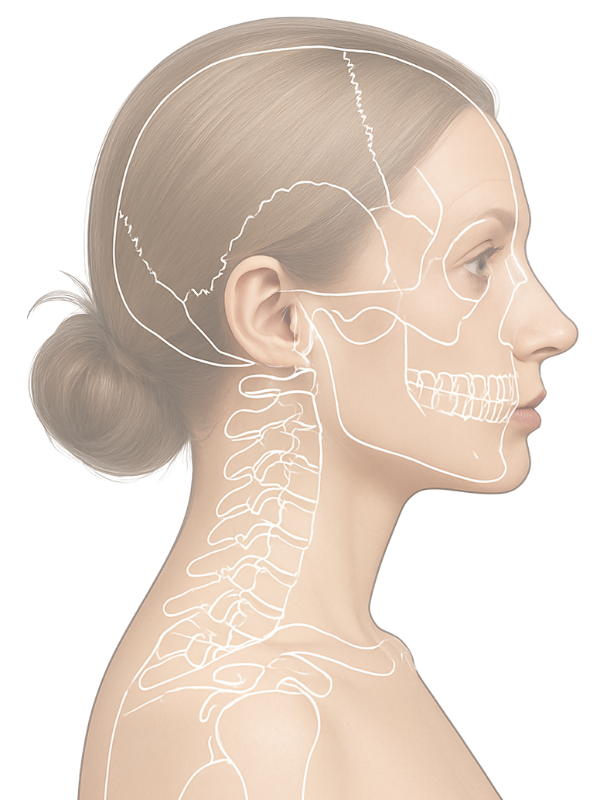
Cervical Spine · Lateral View
Five common sites where structural or neurological dysfunction produces the symptoms at right.
Most clinics give you muscle relaxants and stretching handouts. The pain fades for a week then comes right back. We perform a full structural, neurological, and postural evaluation to identify which cervical structures are involved, then build a plan to correct the problem at its source.
We evaluate spinal alignment, disc integrity, nerve function, and the thoracic spine together. Problems in adjacent regions frequently drive neck symptoms that isolated treatment misses entirely.
Chiropractic adjustments, soft tissue therapies, and regenerative medicine work in concert to address structure, muscle, and tissue repair within a single treatment plan.
Every patient receives a clear treatment timeline with functional benchmarks. You will see documented progress in range of motion, pain levels, and neurological function at each reassessment.
A structural, neurological, or muscular condition affecting the cervical spine. Treated at Prince Health with chiropractic care and regenerative medicine to restore alignment, reduce nerve irritation, and promote tissue healing.
The cervical spine supports the full weight of the head while maintaining more range of motion than any other spinal segment. Seven vertebrae, six intervertebral discs, eight nerve roots, and dozens of muscles and ligaments work together in a region no longer than your hand. That density makes the neck exceptionally vulnerable to dysfunction.
Forward head posture is the most underestimated driver. For every inch the head shifts forward of its natural center of gravity, the cervical spine bears an additional 10 pounds of effective load. Most desk workers carry their head two to three inches forward, tripling the mechanical stress. Over years, this produces disc degeneration, facet inflammation, and chronic muscle fatigue that no amount of stretching can fix on its own.
Whiplash injuries are far more common than most people realize. The I-45 corridor and Hardy Toll Road see thousands of rear-end collisions each year. Even low-speed impacts generate enough force to tear cervical ligaments. Symptoms sometimes appear days or weeks after the accident, which is why early evaluation with our chiropractors in The Woodlands matters for long-term outcomes.
Neck pain rarely stays in the neck. Compressed cervical nerves send pain, numbness, and weakness into the shoulders, arms, and hands. Cervicogenic headaches mimic migraines. Upper back tension, jaw pain, and even dizziness can originate from cervical dysfunction. Our evaluation assesses the full picture, not just the spot where it hurts.
Your treatment plan may include one or both of the following therapies, selected based on your evaluation results and the specific cervical structures involved.
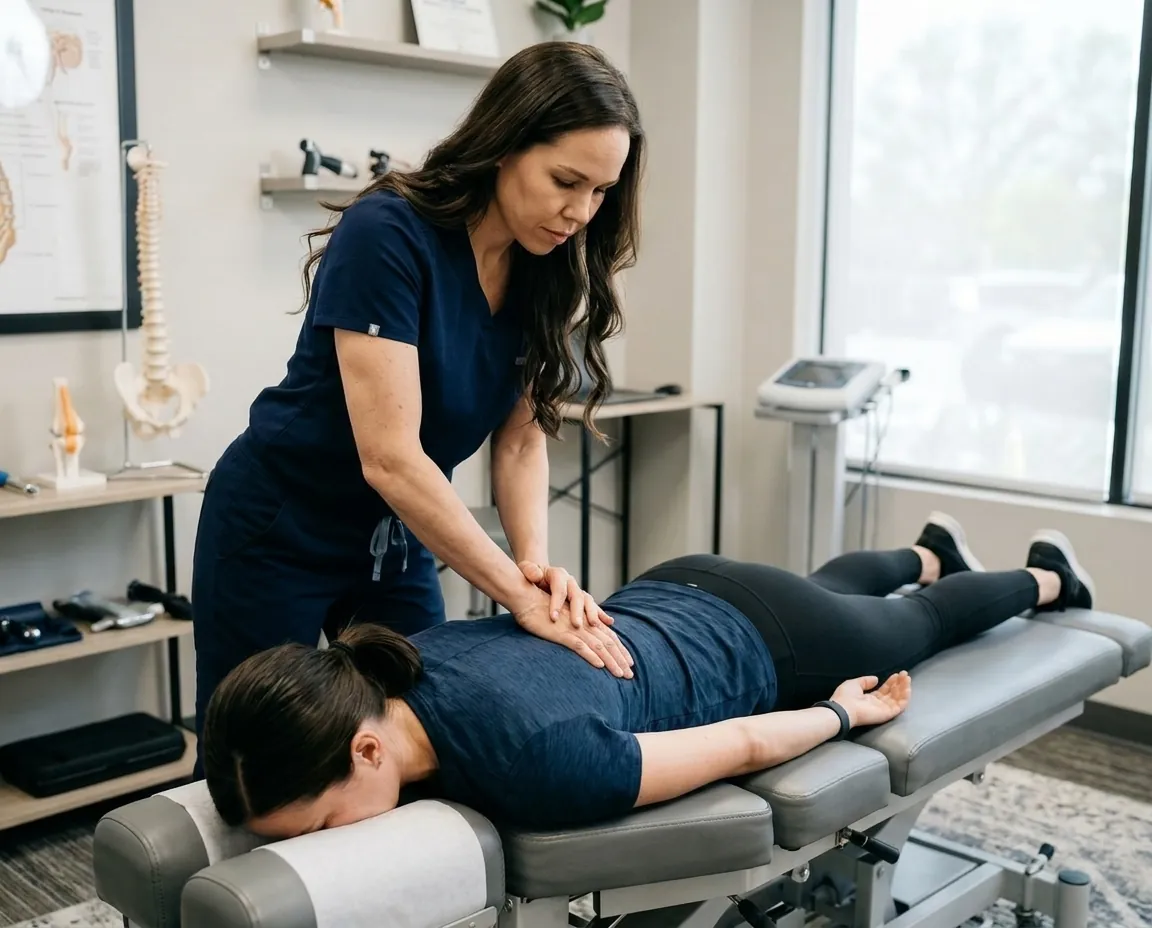
Precise cervical adjustments restore proper vertebral alignment, reduce nerve interference, and relieve the muscle guarding patterns that keep neck pain locked in place.

Regenerative injections deliver growth factors and anti-inflammatory compounds directly to damaged cervical structures, supporting tissue repair at the cellular level without surgery.
Four steps from first visit to documented progress. The same protocol every patient gets, regardless of how busy the clinic is.
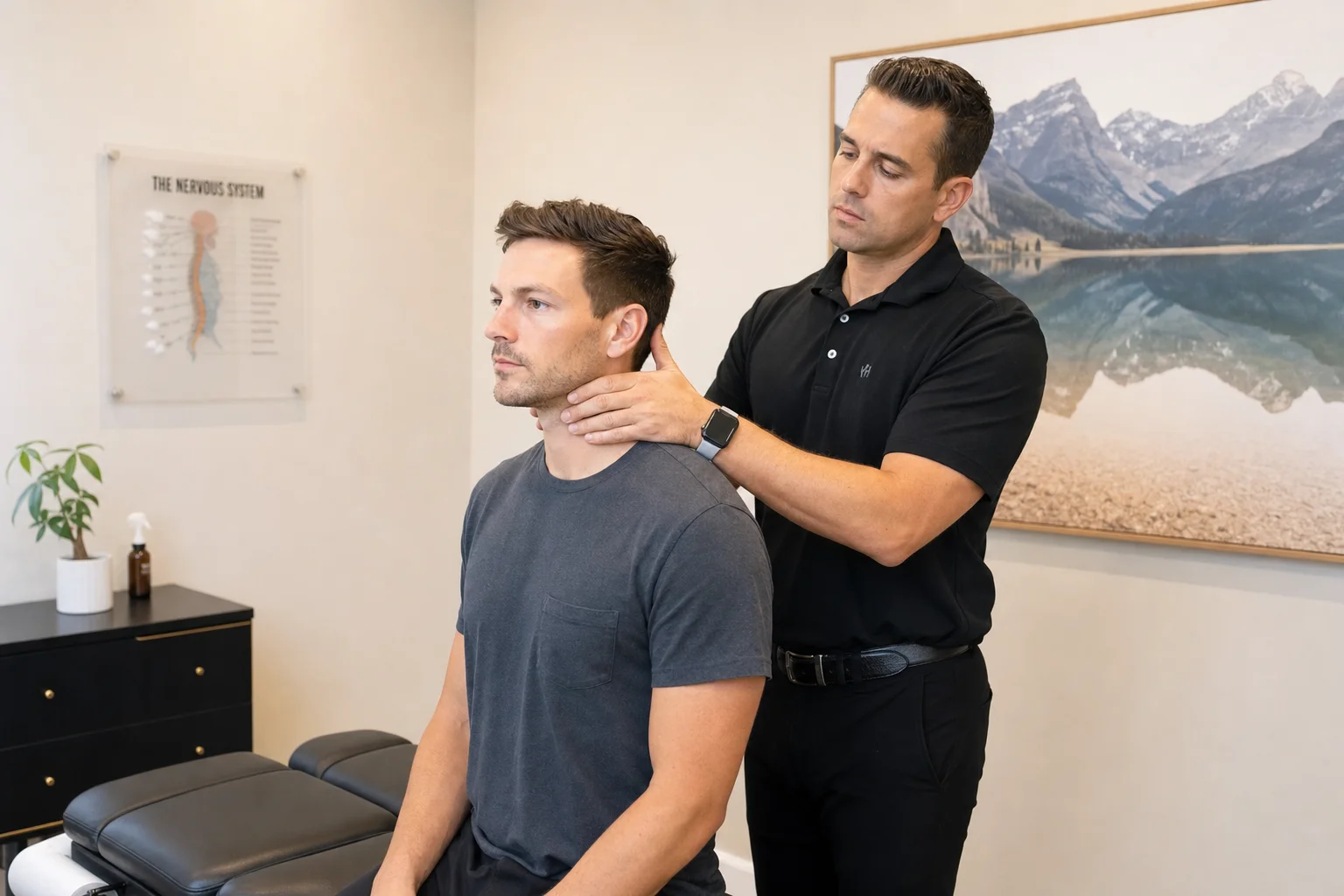
Detailed neck examination including orthopedic testing, neurological screening, range of motion measurement, and postural analysis of the cervical and upper thoracic spine.

Review of existing imaging or referral for X-ray and MRI to assess disc integrity, joint degeneration, and nerve compression. Imaging guides treatment selection.
A clear plan combining chiropractic adjustments, soft tissue therapy, and regenerative options tailored to your specific cervical diagnosis and recovery goals.

Regular reassessment of range of motion, pain levels, neurological function, and postural improvement to confirm progress and refine your treatment plan.
Schedule your evaluation at Prince Health in The Woodlands, TX. We assess your cervical spine, identify the root cause, and determine the right treatment approach for lasting relief.
Persistent neck pain often stems from spinal misalignment, disc degeneration, nerve compression, or chronic postural strain. When pain lingers beyond a few weeks, the underlying cause is usually structural or neurological rather than muscular. Our evaluation identifies the specific source so chiropractic treatment can target the right structures.
Ice for the first 48 hours, gentle range-of-motion stretches, and avoiding positions that aggravate the pain can provide short-term relief. For faster, lasting results, a chiropractic adjustment can restore alignment and reduce nerve pressure in the same visit.
Yes. Our practitioners use precise, low-force techniques including Activator Method and specific cervical adjustments tailored to your condition. Every patient undergoes a thorough evaluation before any treatment begins to confirm the safest approach.
Absolutely. Cervicogenic headaches originate from tension and misalignment in the upper cervical spine. Neck dysfunction can also affect blood flow and nerve signaling to the brain, contributing to dizziness. Correcting the cervical issue often resolves both symptoms.
Combined neck and shoulder pain usually involves the cervical spine, upper trapezius, and thoracic outlet. We address all three areas through chiropractic care and soft tissue techniques rather than treating each symptom in isolation.
Coverage varies by plan and provider. We recommend contacting our office to verify your specific benefits before your first visit. Many patients find that the depth of our evaluation and treatment produces results that reduce long-term healthcare costs.
Many patients feel measurable relief within the first few sessions. Full correction of chronic neck issues typically requires a structured treatment plan over several weeks. We set objective benchmarks so you can track real progress, not just temporary symptom relief.
Neck pain rarely travels alone. These related conditions share the structural and neurological pathways we address.

Targeted evaluation and treatment for shoulder pain including rotator cuff issues, frozen shoulder, impingement, and repetitive strain injuries.

Root-cause evaluation and treatment for low back pain through chiropractic correction, decompression, and regenerative therapies that address the source of pain.

Root-cause evaluation and treatment for migraines and chronic headaches through chiropractic care, functional medicine, and nervous system restoration.

Evaluation and treatment for vertigo and dizziness through chiropractic care, vestibular assessment, and nervous system restoration.
Our office is located at 10847 Kuykendahl Rd #350 in The Woodlands, TX 77382, easily accessible from Woodlands Parkway, Kuykendahl Road, and the I-45 corridor.
We serve patients from Alden Bridge, Cochran's Crossing, Creekside Park, Sterling Ridge, Panther Creek, Grogan's Mill, and surrounding communities.
10847 Kuykendahl Rd #350
The Woodlands, TX 77382
Schedule your appointment at Prince Health in The Woodlands, TX. We listen first, evaluate thoroughly, and build a plan that fits your goals.