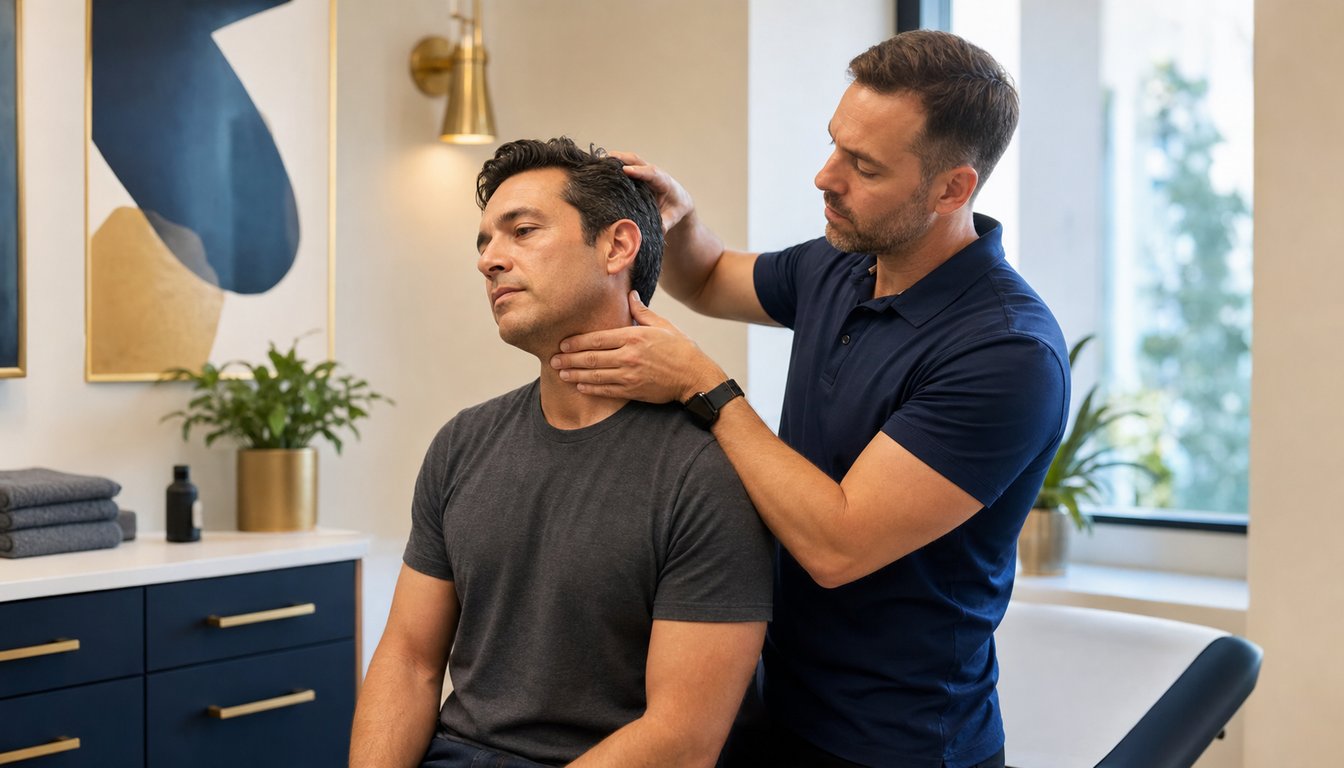
Pediatric chiropractic uses gentle, low-force techniques adapted to a growing spine. Here is what the research says, what a visit looks like, and the questions parents should ask.
Parents usually arrive at this question from one of two directions. Either a child has a concrete complaint, a sore neck after sports, posture that keeps sliding, headaches after long school days, or a parent already under chiropractic care wonders whether gentle care makes sense for their kids too. Both deserve a straightforward answer about what pediatric chiropractic is, what it is not, and how to judge whether a provider handles children properly.
The short answer: pediatric chiropractic is not adult treatment scaled down. Done properly, it uses substantially lighter, low-force techniques adapted to a growing spine, screens carefully for anything that belongs with a pediatrician first, and keeps parents in the room at every step.
A Child's Spine Is Not a Small Adult Spine
Children's spines are still developing: growth plates are open, ligaments are more elastic, and the forces appropriate for a 40-year-old have no place in a pediatric visit. That is why technique selection matters more in pediatric care than almost anywhere else. Low-force methods, including instrument-assisted adjusting with pressure comparable to a fingertip tap, exist precisely for small and developing frames.
At Prince Health, pediatric care is led by Dr. Ashley Prince, DC, who is pursuing her Diplomate with the International Chiropractic Pediatric Association and cares for children from infancy through the teen years. Visits are built around the child's comfort, with parents present throughout and every step explained before it happens.
What the Research Honestly Shows
Parents deserve the evidence without spin, and it has two sides. On safety, a review of spinal manipulative therapy in children under 10 found adverse events were mostly mild and transient, things like brief soreness or irritability, with serious events rare. On effectiveness, systematic reviews of spinal manipulation for infants and children show mixed results that vary by condition, with the strongest signals in musculoskeletal complaints and weak support for treating non-musculoskeletal diseases.
That maps to how we practice. Pediatric chiropractic treatment at Prince Health focuses on the musculoskeletal territory where the rationale is strongest: neck and back discomfort, posture under backpack and screen load, and movement complaints in young athletes. We do not present adjustments as treatment for asthma, ear infections, or other medical diseases, and anything that looks medical gets pointed to your pediatrician first.
What a Pediatric Visit Looks Like
The structure mirrors careful adult care, adapted for small patients:
- History first, taken with the parent, covering birth history for infants, activity load for older kids, and any medical care already in motion.
- A gentle examination scaled to age: posture, gait, range of motion, and neurological screening appropriate for a developing system.
- A clear conversation before any treatment, so the parent knows what was found and what is proposed.
- Low-force treatment matched to the child's size and comfort, with spinal manipulation approaches modified far below adult force.
- Short, measured plans. Children typically respond quickly when care is appropriate, so plans are brief and re-checked rather than open-ended.
Sports-active kids and teens are a large share of our pediatric visits, and that side of care is shared with Dr. Aaron Wiggins, DC, whose focus includes sports-related injuries within our broader pain management approach.
Questions That Sort Pediatric Providers Quickly
- What extra training do you have in pediatric care, and how young do you treat?
- What techniques do you use on children, and how do they differ from adult care?
- Will you tell me when something belongs with our pediatrician instead?
- Am I in the room the whole time? The only acceptable answer is yes.
- How short is a typical pediatric care plan, and how is progress checked?
A provider who answers those plainly is showing you their screening habits, which is the thing that actually keeps pediatric care safe.
For Parents in The Woodlands
Prince Health sees families from across The Woodlands, including Alden Bridge, Cochran's Crossing, Sterling Ridge, and Creekside Park, at 10847 Kuykendahl Rd #350. If your child has a musculoskeletal complaint, or you simply want a careful evaluation before deciding anything, you can schedule a visit and meet the team first.
Frequently Asked Questions
Is chiropractic care safe for children?
Research on spinal manipulative therapy in children reports that adverse events are mostly mild and short-lived, with serious events rare. Safety in practice depends on screening, age-appropriate technique, and honest referral habits, which is why those should be the first things you ask any provider about.
At what age can a child see a chiropractor?
Care can be adapted from infancy through the teen years, but the technique changes completely with age. Infant care involves fingertip-level pressure, nothing like an adult adjustment. At Prince Health, age and development determine both the exam and the method used.
Can chiropractic care help my child's ear infections or asthma?
The evidence does not support chiropractic care as a treatment for medical diseases like asthma or ear infections, and we do not present it that way. Those conditions belong with your pediatrician. Chiropractic care earns its place in musculoskeletal complaints: neck, back, posture, and movement.
Does my child need X-rays before pediatric chiropractic care?
Usually not. Imaging in children is reserved for cases where history or examination findings specifically call for it, such as significant trauma. Routine X-rays on every child would itself be a warning sign about a clinic's habits.
Schedule an Appointment Today
Get optimized and highly effective care for your condition by visiting our office in The Woodlands, TX.