Does long COVID go away? For some people it does, but CDC notes symptoms can last months to years and can fade and return. Ongoing strain on the nervous system, immune response, cellular energy and small blood vessels can stall recovery, even when routine labs look normal. At Prince Health in The Woodlands, an evaluation-led plan matches care to the systems involved and tracks progress over time.
Many patients start asking why long COVID doesn't go away after the infection is gone but daily life still feels different. Does long COVID go away on its own, and if it does, why hasn't it yet? Energy doesn't return the way they expected. Brain fog makes work harder. Sleep may feel light or unrefreshing.
A short walk, a meeting, or a normal errand can bring on a crash that lasts longer than it should. When recovery keeps moving in the wrong direction, it makes sense to look beyond the original infection and ask what systems are still under strain.
How Does Long COVID Keep the Body in Stress Mode?
Long COVID can affect more than one system at the same time. The nervous system, immune response, circulation, hormones, and cellular energy production may all play a role. When those systems stay irritated after the acute infection, symptoms can continue even when routine lab work doesn't explain what's going on.
A wider evaluation, such as a long COVID evaluation in The Woodlands, can help when a basic checkup doesn't capture the full picture. That review looks at how the body is regulating energy, inflammation, oxygen delivery, and stress response after the initial illness.
That broader lens helps explain why symptoms can shift from day to day. A person may feel functional one morning and depleted by the afternoon. That pattern can reflect poor regulation, not a lack of effort.
Why Does Long COVID Not Go Away?
Long COVID often lingers because several drivers can keep the body from returning to baseline at once: autonomic nervous system strain, ongoing immune activation, stressed mitochondria, and reduced oxygen delivery through small blood vessels. These factors overlap, which is why one symptom rarely tells the whole story.
A 2023 review of long COVID mechanisms in Nature Reviews Microbiology describes each of these patterns, including dysautonomia, reactivated viruses such as Epstein-Barr, mitochondrial dysfunction, and microclots that disrupt circulation. Looking at them one at a time makes the picture easier to follow.
Autonomic Nervous System Strain
The autonomic nervous system helps control heart rate, blood pressure, digestion, temperature, and sleep rhythm. After COVID, the sympathetic side can stay too active while the calming parasympathetic side doesn't engage well enough. That can leave patients feeling wired, exhausted, lightheaded, or unable to recover after normal effort.
Lingering Immune Activation
Some patients continue to deal with an unsettled immune response after the acute infection. This may involve inflammatory signaling, viral debris, or reactivation patterns involving dormant viruses such as Epstein-Barr. When the immune system stays reactive, the body can spend more energy defending than repairing.
Mitochondrial Stress
Mitochondria help produce ATP, the energy cells use to function. When this system is strained, simple tasks can feel unusually expensive. That can help explain post-exertional malaise, where an activity that used to feel normal leads to a delayed crash. Post-exertional malaise means symptoms get worse after physical or mental effort that used to be manageable, and the crash often shows up hours or a day later instead of right away.
Oxygen Delivery and Microcirculation
Small circulation changes may also affect recovery. If oxygen delivery is limited at the tissue level, the brain, muscles, and nervous system may not get the support they need during activity. That can contribute to fatigue, brain fog, exercise intolerance, and slower recovery after exertion. This is one reason oxygen-focused care, such as hyperbaric oxygen sessions for post-viral recovery, is being studied in long COVID, including a 2022 randomized controlled trial in Scientific Reports.
How Long Can Long COVID Last?
Long COVID can last months to years. CDC defines it as a chronic condition present for at least three months after infection, and symptoms can fade, return, or change over time. There is no single test that confirms it, so the diagnosis rests on health history, the COVID-19 illness, and an exam.
According to CDC's Long COVID Basics, routine blood tests, chest X-rays and electrocardiograms may be normal in someone with long COVID. That is why a timeline of symptoms, and what makes them better or worse, often tells more than a single lab result. The NIH is still working through these questions in its RECOVER research initiative, which was created to understand, diagnose, prevent, and treat long COVID.
Why Standard Testing May Miss the Pattern
Many patients with post-COVID syndrome have already been told their labs look normal. That can be frustrating when symptoms are still affecting work, family life, exercise, and basic routines. Standard panels can be useful, but they may not show immune activity, inflammation, metabolic stress, autonomic changes, or nutrient depletion in enough detail.
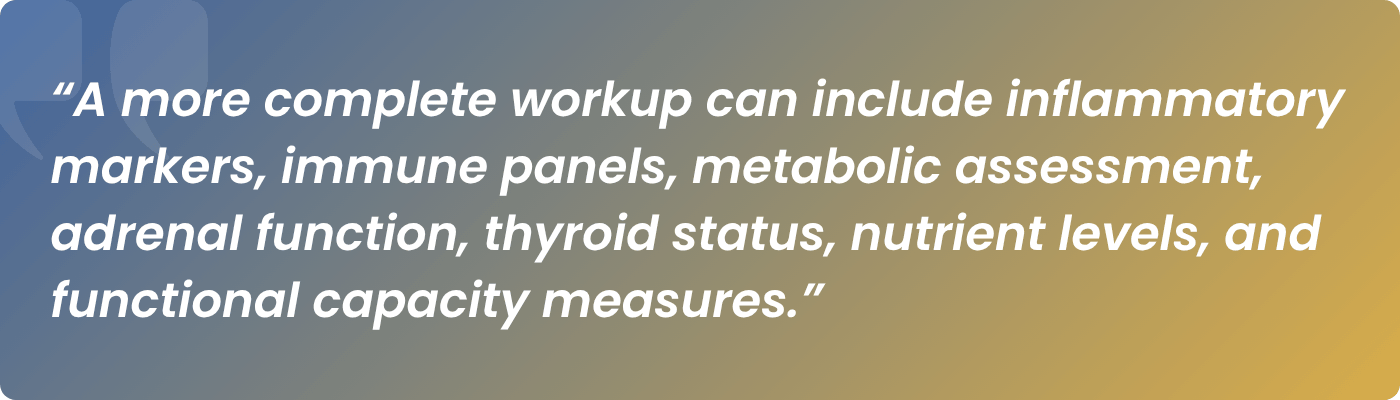
A more complete workup can include inflammatory markers, immune panels, metabolic assessment, adrenal function, thyroid status, nutrient levels, and functional capacity measures. The purpose is to see which systems are still under pressure and where support may be needed first.
That kind of review can make the condition easier to understand. Instead of separating fatigue, brain fog, dizziness, and sleep changes into unrelated complaints, the evaluation looks for patterns that connect them.
What May Help Long COVID Recovery?
What may help long COVID recovery is a plan that matches the systems still under strain. CDC notes there are currently no approved treatments specific to long COVID, so care focuses on the affected areas, such as oxygen delivery, immune balance, nutrient status, hormones and breathing, and adjusts as the body responds.
A thoughtful plan for long-haul COVID should match the systems that are affected. The goal is to help the body move out of a reactive state and toward steadier regulation over time.
Depending on the person's findings, care may include hyperbaric oxygen therapy, which is being studied for long COVID and is used to support oxygen delivery; IV ozone therapy, which may influence oxidative balance, immune signaling, and oxygen utilization (it is not FDA-approved for long COVID); IV nutrient therapy to replenish depleted vitamins and antioxidants; functional medicine to address metabolic or hormonal disruption; and halotherapy when respiratory symptoms are part of the picture.
Those therapies should be selected based on the evaluation. A patient whose main concern is post-exertional crashes may need a different plan than someone dealing with breathing symptoms, poor sleep, or viral reactivation patterns.
What a Long COVID Visit Should Clarify
A useful visit should connect the timeline of symptoms with the systems that may still be dysregulated. That includes the original infection, what changed afterward, which symptoms are most limiting, and what has already been tried.
The process may include a detailed history, functional capacity review, previous test results, and advanced lab work when needed. From there, the care plan can be shaped around the patient's specific pattern rather than a generic recovery template.
Tracking gives the process more structure. Functional capacity, symptom scoring, lab changes, and tolerance to daily activity can all help show whether the plan is moving in the right direction. Follow-up also helps refine care. If energy improves but sleep stays poor, the plan may need to shift. If heart rate symptoms calm down but fatigue remains heavy, another layer may need attention.
What This Looks Like in The Woodlands
Our office is located at 10847 Kuykendahl Rd #350 in The Woodlands, TX 77382. The location is accessible from Kuykendahl Road, Woodlands Parkway, and the I-45 corridor, which can make ongoing care easier for patients coming from Alden Bridge, Cochran's Crossing, Creekside Park, Sterling Ridge, Panther Creek, Grogan's Mill, and nearby communities.
That practical access can help when care includes evaluation, lab review, wellness center therapies, and reassessment over time. Recovery often takes more than one visit, so consistency is easier when appointments fit into a real schedule.
A More Useful Next Step
Asking why long COVID doesn't go away can be the first step toward a more complete evaluation. Persistent post-viral symptoms may involve the nervous system, immune response, circulation, hormones, and cellular energy at the same time. A stronger next step is to identify which systems are still under stress and what kind of support may help recovery become steadier.
If symptoms have been affecting your energy, focus, breathing, heart rate, or daily routine, schedule a consultation to review whether a more complete evaluation makes sense for your case.
Frequently Asked Questions
How long can long COVID last?
Long COVID can last for months to years. CDC defines it as a chronic condition that is present for at least three months after a COVID-19 infection, and symptoms can emerge, ease, and return over time. How long it lasts varies from person to person, which is why progress is easier to judge when the same markers are tracked at each visit.
Can you recover from long COVID?
Recovery is possible, but it varies widely. CDC notes that symptoms can resolve and then return over weeks, months or even years, and research reviews report that symptoms last for years in some people. A plan that targets the systems still under strain, and measures progress over time, aims to make recovery steadier rather than leaving it to chance.
Is there a test to confirm long COVID?
There is no approved laboratory test that confirms long COVID, and a positive COVID-19 test is not required for the diagnosis. Providers consider the health history, the COVID-19 illness and a physical exam. Routine blood work can be normal, so a broader workup is often used to see which systems are still affected.
What is post-exertional malaise?
Post-exertional malaise is a worsening of symptoms after physical or mental effort that used to feel normal. The crash is often delayed, showing up hours or a day after the activity, and it can last longer than expected. It is one of the patterns linked to mitochondrial stress in long COVID, so pacing activity is usually part of the plan.
Is long COVID real?
Yes. CDC describes long COVID as a serious illness that can lead to chronic conditions and sometimes disability, and the NIH runs the RECOVER initiative to study it. Normal routine labs do not mean symptoms are imagined. They often mean the standard panel was not built to show the systems involved.
Schedule an Appointment Today
Get optimized and highly effective care for your condition by visiting our office in The Woodlands, TX.