Cervical and Nervous System Tension
Restricted upper cervical motion irritates nerves at the base of the skull, producing the cervicogenic headache pattern that mimics migraine but responds to spinal correction.

Missing work days. Canceling plans at the last minute. Living in constant fear of the next episode. The medication barely takes the edge off, and every neurologist visit ends the same way. Our team finds the structural and metabolic triggers behind your migraines so you can stop managing symptoms and start preventing them.
Migraines rarely have a single trigger. These are the most common drivers we identify during evaluation at our conditions practice in The Woodlands.
Restricted upper cervical motion irritates nerves at the base of the skull, producing the cervicogenic headache pattern that mimics migraine but responds to spinal correction.

Cortical spreading depression and abnormal neural firing trigger the migraine cascade. Identifying personal triggers can prevent the chain from starting.

Estrogen fluctuations around menstruation, ovulation, perimenopause, or pregnancy can drive migraine. Tracking the cycle clarifies the pattern.

Migraine runs in families. Genetic susceptibility does not dictate destiny, but it does shape the threshold at which other triggers cause an attack.

Bright lights, strong smells, weather pressure shifts, and certain foods can tip a susceptible nervous system into an attack. Trigger identification reduces frequency.

Serotonin imbalances in the brainstem are core to migraine biology. Sleep, gut health, and stress all influence serotonin tone.

Brain blood vessels narrowing then dilating contribute to the throbbing quality of migraine pain. Vasodilation in meningeal vessels also sensitizes pain-sensing nerves.

Conditions like migraine, cluster headache, or trigeminal neuralgia involve specific nervous system pathways and patterns. Identifying the type drives the treatment.
Migraine and headache symptoms range from dull pressure to debilitating neurological episodes. We classify the headache type and identify the underlying drivers behind your pattern.
Cervical tension, jaw clenching, screen exposure, sleep debt, meal timing gaps, dehydration, hormonal fluctuations, and emotional stress all contribute to a cumulative load on the nervous system.
When that load crosses your personal threshold, an episode begins. Lower the load and raise the threshold, and the frequency drops.
Most migraine treatment is reactive. Wait for the headache, take a pill, hope it passes. Our team finds the structural and metabolic triggers that set the cascade in motion. We assess your cervical spine, jaw mechanics, hormonal balance, and nutritional status to determine which factors are lowering your threshold.
We assess cervical spine alignment, cranial nerve function, jaw mechanics, posture, and metabolic markers to identify every factor lowering your migraine threshold.
Upper cervical adjustments address structural drivers while functional medicine protocols target hormonal, nutritional, and inflammatory contributors that medication cannot reach.
We track headache frequency, intensity, and cervical spine function at defined intervals. Documented progress guides ongoing care decisions, not guesswork.
Neurological and musculoskeletal conditions driven by structural tension, metabolic imbalances, and nervous system sensitization. Treated at Prince Health with chiropractic care and functional medicine to reduce episode frequency and intensity at the source.
Migraines are not simply bad headaches. They are complex neurological events involving changes in blood flow, neurotransmitter activity, and nervous system excitability. A single episode can include intense throbbing pain, visual disturbances, nausea, cognitive impairment, and fatigue that persists for hours or days. For chronic sufferers, migraines reshape daily life into a pattern of anticipation, avoidance, and recovery.
Every person has a migraine threshold. This is the level of cumulative nervous system load that, when exceeded, triggers an episode. Cervical tension, jaw clenching, screen exposure, sleep debt, meal timing gaps, dehydration, hormonal fluctuations, and emotional stress all contribute to that load. Individually, each factor may be manageable. When several accumulate, the nervous system crosses its threshold and an episode begins.
Headaches fall into two broad categories. Primary headaches, including migraines, tension-type headaches, and cluster headaches, are the headache disorder itself. Secondary headaches are symptoms of an underlying problem: a head or neck injury, medication overuse, sinus disease, or post-concussion syndrome. Distinguishing primary from secondary headaches is the most important step in evaluation. Cervicogenic headaches in particular respond well to chiropractic treatment targeting the upper cervical spine.
The conventional approach focuses heavily on medication for prevention and symptom management. These tools have value, yet they do not address the structural misalignments, hormonal disruptions, or nutritional deficiencies that keep the threshold chronically low. Our functional medicine evaluation fills that gap by identifying the metabolic factors that make the nervous system vulnerable to migraine in the first place.
Your treatment plan may include one or both of the following therapies, selected based on your evaluation results and the specific factors driving your migraines.
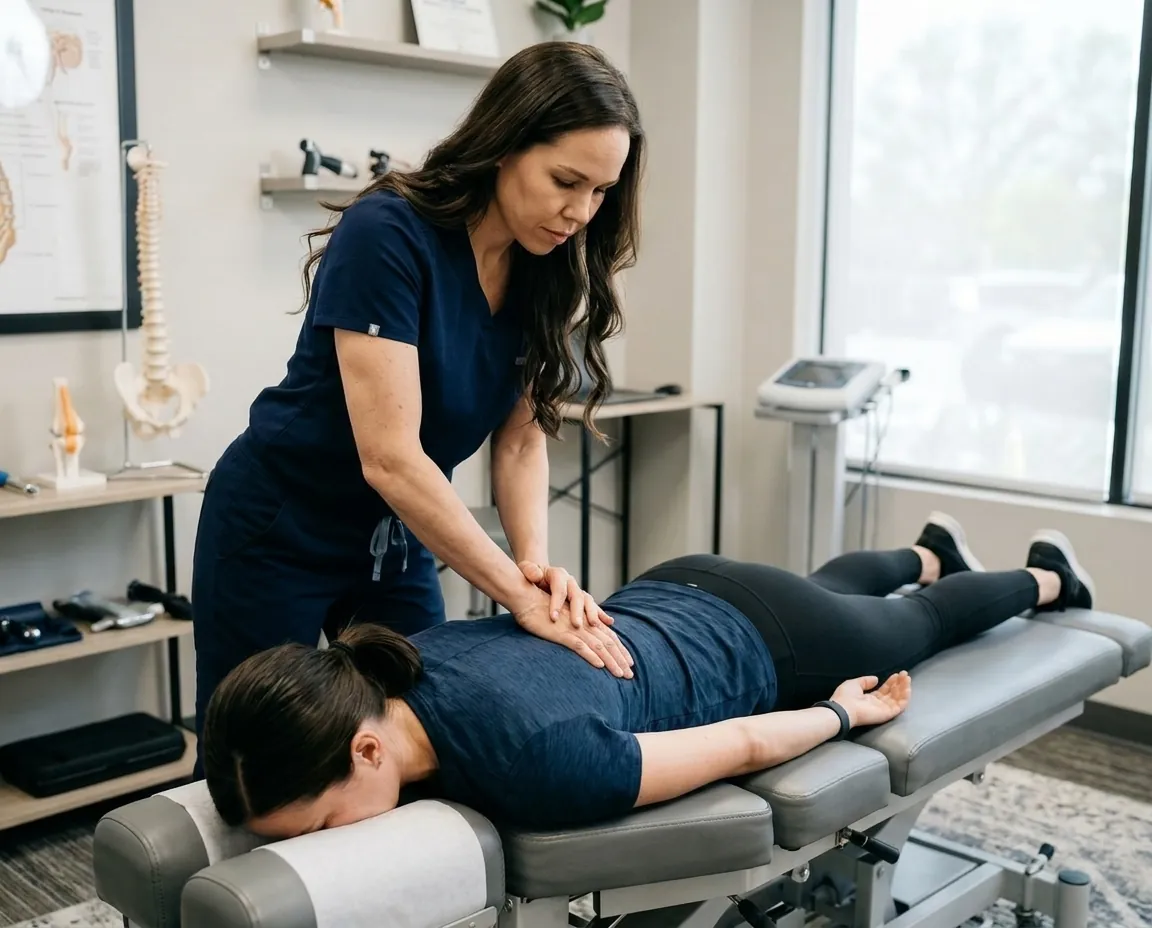
Upper cervical chiropractic adjustments restore alignment in the spine segments that directly influence nerve signaling to the head and neck, reducing the structural tension that triggers migraine episodes.

Functional medicine testing uncovers hormonal imbalances, nutrient deficiencies, inflammatory markers, and metabolic patterns that keep your migraine threshold low, then corrects them with targeted protocols.
Four steps from first visit to documented reduction. The same protocol every patient gets, regardless of how busy the clinic is.
Cervical spine assessment, cranial nerve screening, jaw evaluation, postural analysis, and a detailed headache history including trigger patterns and episode frequency.
Functional lab panels as indicated to evaluate hormonal patterns, nutrient status, inflammatory markers, and metabolic factors that influence your migraine threshold.

A multi-modal plan combining chiropractic cervical correction, functional medicine protocols, trigger management strategies, and lifestyle modifications tailored to your specific pattern.

Headache frequency and intensity tracking, cervical spine reassessment, and lab retesting to document reduction in episodes and guide ongoing care decisions.
Schedule your evaluation at Prince Health in The Woodlands, TX. We identify the structural and metabolic factors driving your headaches and build a plan for lasting relief.
Migraines are threshold events driven by cumulative nervous system load. Common triggers include cervical spine tension, jaw clenching, screen exposure, meal timing gaps, sleep debt, and weather changes. We help you identify your specific pattern through structured tracking and targeted evaluation.
Tension headaches produce a band-like pressure around the head. Migraines usually involve throbbing pain on one side, sensitivity to light or sound, and sometimes aura or nausea. The distinction matters because chiropractic treatment approaches differ based on the headache type.
Yes. Cervical spine misalignment and upper neck tension are major contributors to migraine patterns. Regular chiropractic adjustments can reduce the frequency, duration, and intensity of migraines by improving nerve function and reducing structural stress on the brainstem.
The gut-brain axis directly influences migraine activity. Food sensitivities, histamine intolerance, and gut inflammation can lower the migraine threshold. Our functional medicine evaluation can identify dietary triggers that conventional neurology often overlooks.
Seek care if headaches are increasing in frequency, don't respond to over-the-counter remedies, wake you from sleep, or are accompanied by visual changes, weakness, or confusion. Headaches that interfere with daily life or require medication more than twice a week deserve professional evaluation.
Most insurance plans cover chiropractic evaluation and treatment for migraines. Coverage for functional medicine testing varies by plan. Contact our office to verify your specific benefits. Many patients find that addressing root causes reduces their long-term medication and emergency room costs.
Our chiropractic and functional medicine approaches are non-pharmaceutical and can be safely adapted for pregnant patients. Many women experience increased migraines during pregnancy when medication options are limited. Cervical correction and nutritional support offer effective alternatives.
Migraines share neurological and cervical pathways with several conditions we treat. Addressing the underlying drivers often resolves more than just the headache.

Comprehensive evaluation and treatment for acute and chronic neck pain through spinal alignment, soft tissue therapy, and nervous system restoration.

Evaluation and treatment for vertigo and dizziness through chiropractic care, vestibular assessment, and nervous system restoration.

Comprehensive evaluation and management of tinnitus through chiropractic care, functional medicine, and nervous system approaches to reduce symptoms.

Targeted evaluation and treatment for shoulder pain including rotator cuff issues, frozen shoulder, impingement, and repetitive strain injuries.
Our office is located at 10847 Kuykendahl Rd #350 in The Woodlands, TX 77382, easily accessible from Woodlands Parkway, Kuykendahl Road, and the I-45 corridor.
We serve patients from Alden Bridge, Cochran's Crossing, Creekside Park, Sterling Ridge, Panther Creek, Grogan's Mill, and surrounding communities.
10847 Kuykendahl Rd #350
The Woodlands, TX 77382
Schedule your appointment at Prince Health in The Woodlands, TX. We listen first, evaluate thoroughly, and build a plan that fits your goals.